
Better buying decisions. Real numbers.
A good supplier deal starts with understanding what you need. Here’s a real purchasing example from within Pearl Lemon Group, showing how a clearer specification lowered the final bill.
One revised brief. 23.7% less spend.
The team removed items that weren't needed, kept the essential staffing and equipment, and checked the resulting spend against the supplier's invoice.
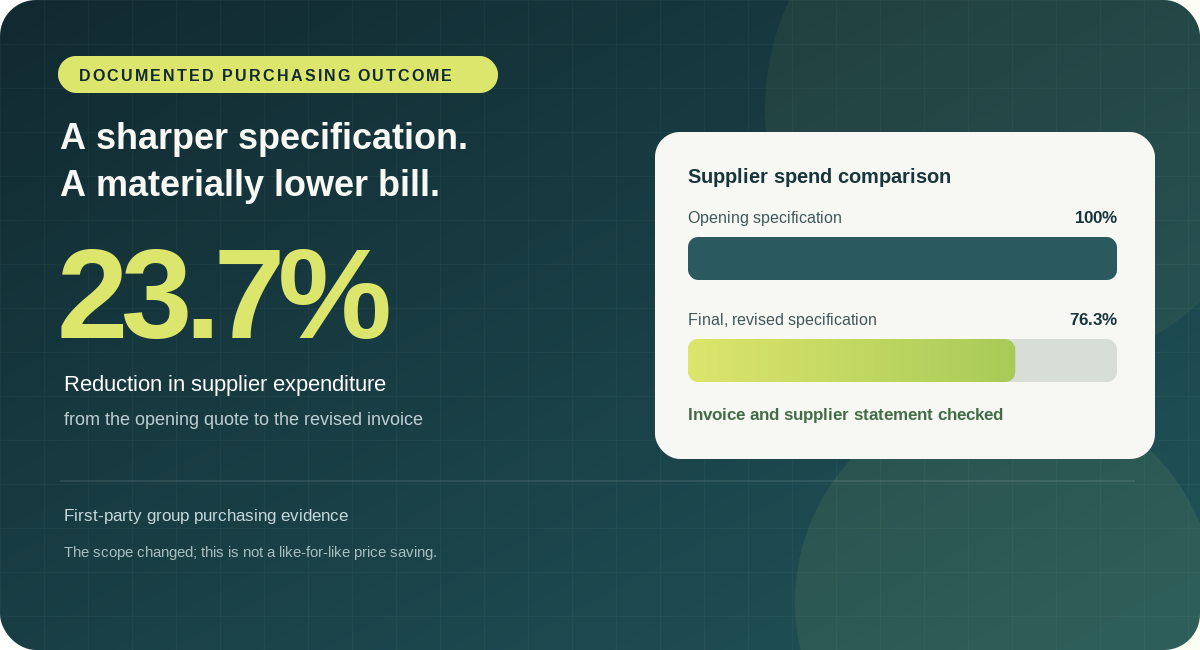
A more precise order. A lower bill.
Unneeded menu items came out. Staff, tableware, delivery and the right dietary options stayed in the order.
The original and final packages differed, so this measures lower spending on a revised order rather than a discount on the same service.
Read the full purchasing decision ↗How do you know whether the deal is better?
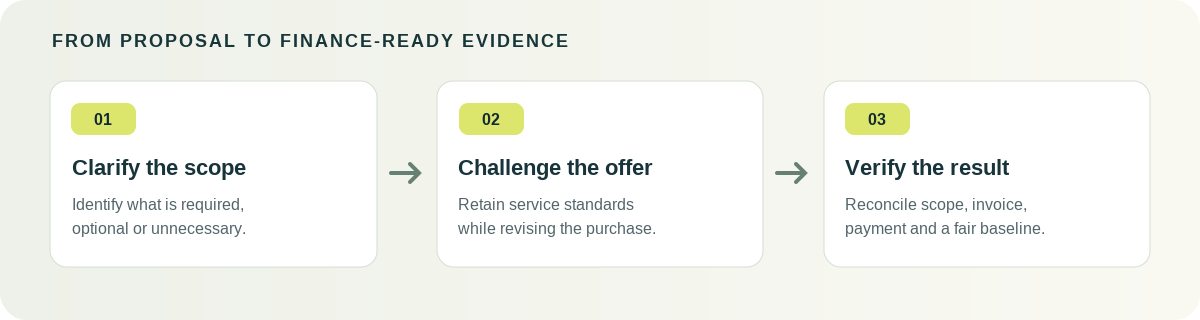
Before you count a saving, you need to know what changed. These are the three questions we'd ask of any supplier agreement.
Are you buying the same thing?
Compare what's actually included: quantities, staffing, delivery, service levels and any extras. If the specification changes, record that separately.
Did the saving reach your invoices?
A better quote is a useful start. Check the signed terms, transition costs and invoices to see what the business really saved.
Who did the work?
Keep track of changes already agreed by your team and those negotiated during the project. This matters especially when fees depend on the outcome.
Make better decisions on your next contract.
Use these guides to compare supplier offers, prepare for renewals and work out what a lower price would mean for your business.
Hard savings vs cost avoidance
Separate a lower invoice from a supplier rate reduction and an increase that never took effect.
Understand the calculation ↗ NEGOTIATION FRAMEWORKWhat to establish before approaching a supplier
Define your baseline, alternative and approval rights before comparing commercial offers.
Use the checklist ↗ PORTFOLIO PLAYBOOKA procurement workplan for private equity
Triaging contracts across portfolio companies, prioritising supplier leverage and verifying implemented improvements.
Explore the 100-day plan ↗About this example: the purchase was made by a fellow Pearl Lemon Group business. The 23.7% figure compares an opening proposal with an invoice for a revised specification. Our other resources explain the method; they aren't additional client case studies.
Got a supplier agreement worth reviewing?
If you have substantial addressable supplier expenditure, we can discuss where a negotiation is genuinely possible and how your finance team would validate the implemented result.